
Sale!
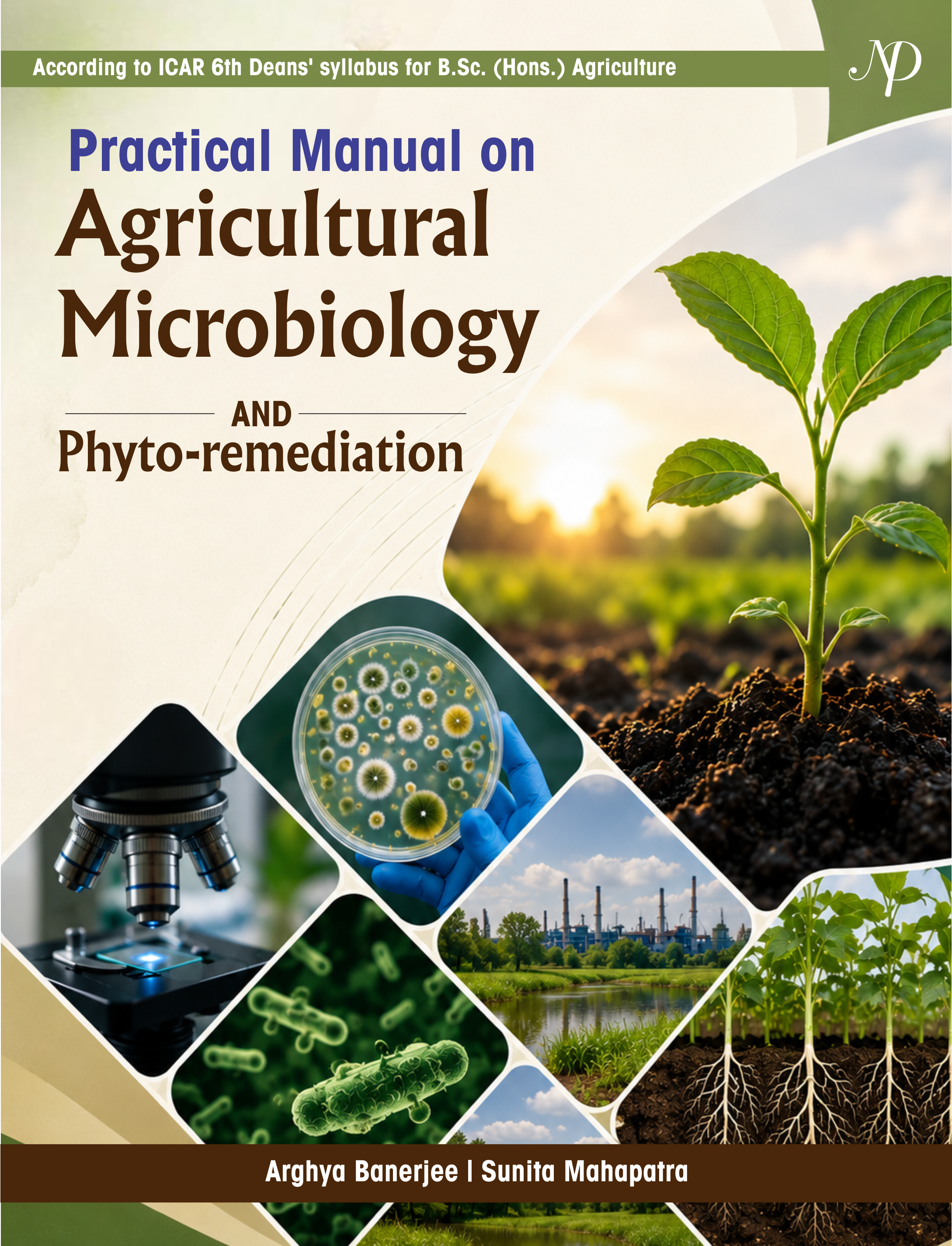
Practical Manual on Agricultural Microbiology and Phyto-remediation
ISBN NO:9788169480116 PAGES :145 PAPER TYPE: PaperbackAuthor(s) / Editor(s):
Dr. Arghya Banerjee and Dr. Sunita Mahapatra
Sample Chapter
Agricultural microbiology is a branch of microbiology dealing with plant-associated microbes and plant diseases. It also deals with the microbiology of soil fertility, such as microbial degradation of organic matter and soil nutrient transformations.The primary goal of agricultural microbiology is to comprehensively explore the interactions between beneficial microorganisms like bacteria and fungi with crops. Being an applied science and detailed study of important microbes in sustainable agriculture, laboratory work under this subject is indispensable.Keeping this view, ICAR has framed a syllabus for practical classes of each courses of Plant Pathology for undergraduate students.The content of this manual is framed according to the new syllabus of the course- “Agricultural Microbiology and Phyto-remediation” as mentioned in ICAR Sixth Dean Committee. In this manual, the syllabus for practical of this course has divided into fourteen lessons including introduction to microbiology laboratory, study of the microscope; acquaintance with laboratory material and equipment; microscopic observation of different groups of microorganisms: moulds (fungi); direct staining of bacteria by crystal violet; negative or indirect staining of bacteria by nigrosin; Gram staining of bacteria; study of phyllosphere and rhizosphere microflora; measurement of microorganisms; preparation of culture media; isolation and purification of rhizospheric microbes; isolation and purification of N- fixers; isolation and purification of nutrient solubilizers; isolation and purification of endophytes.