
Sale!
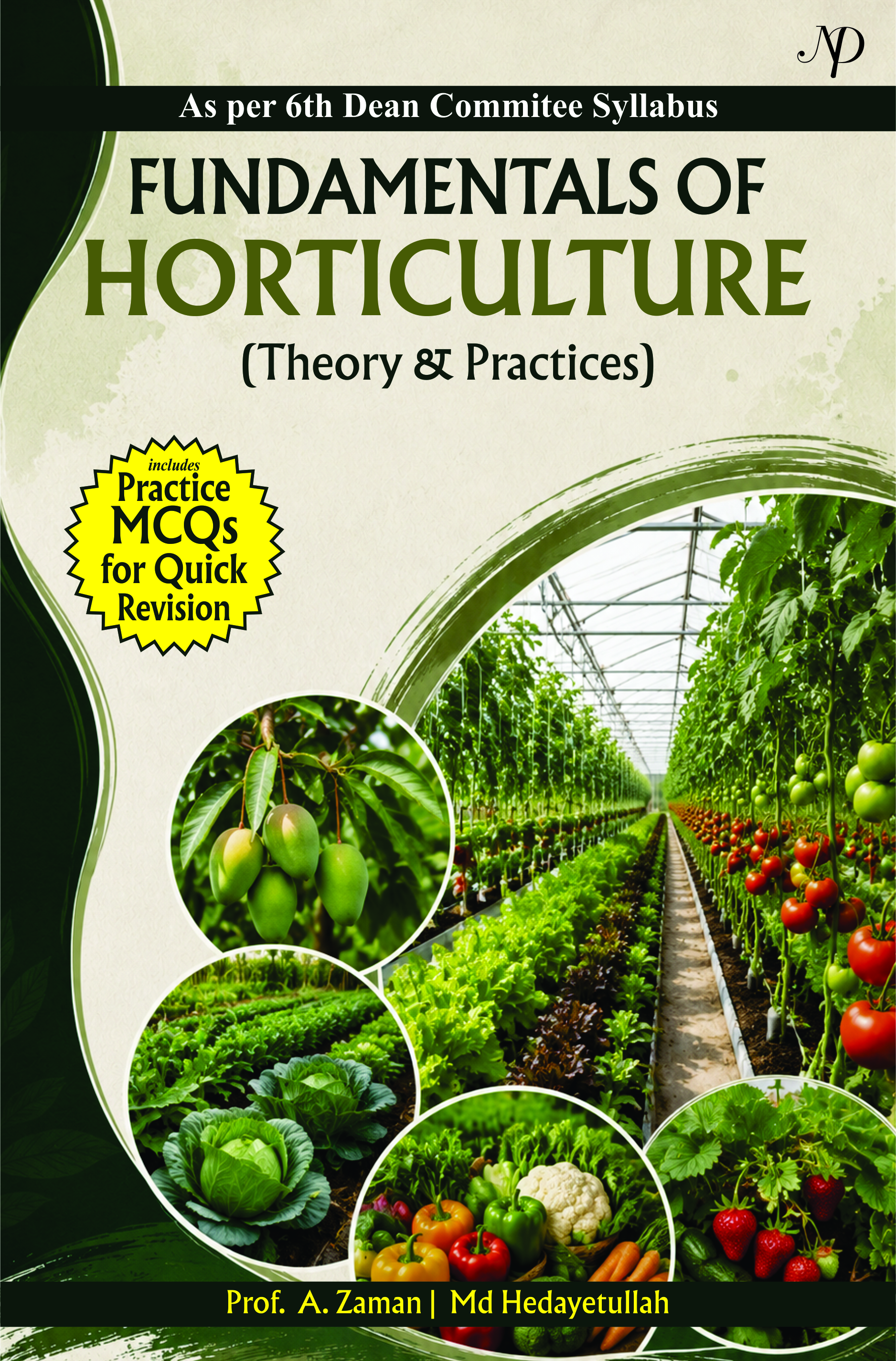
Fundamentals of Horticulture (Theory & Practices)
ISBN NO:9788169480130 PAGES :257 PAPER TYPE: PaperbackAuthor(s) / Editor(s):
Prof. (Dr.) A. Zaman and Dr. Md Hedayetullah
Sample Chapter
Fundamentals of Horticulture (Theory & Practices) is a comprehensive textbook designed to provide students and practitioners with a foundational understanding of the science, art, and business of growing plants. By bridging theoretical knowledge with practical application, the book serves as an essential guide to the lifecycle of horticultural crops—from seed selection to final market delivery. The text is structured into five core chapters, ensuring a logical progression of learning. It begins by establishing the disciplinary framework, covering the history, economic importance, and classification of horticultural crops.
It emphasizes the critical relationship between environmental factors—specifically soil and climate—and the successful cultivation of plants. Amajor focus of the book is Plant Propagation and Seed Physiology. It delves into the intricate science of plant multiplication, comparing the merits and demerits of sexual (seed) and asexual (vegetative) propagation methods. This section provides detailed insights into seed dormancy, germination, and the complexities of the stock-scion relationship, which is vital for grafting and nursery
management. The curriculum then shifts to Orchard Management and Canopy Architecture. Students are introduced to the principles of establishing orchards, including site selection and layout design. It also explores the technical aspects of training and pruning, which are fundamental to developing productive, healthy tree structures. Furthermore, the book addresses the Physiology of Flowering and Fruit Set. By examining topics such as juvenility, flower bud differentiation, and pollination, the text explains the biological mechanisms behind fruit production and yield optimization. The role of bio-regulators in managing these processes is highlighted as a key modern tool for growers. Finally, the book concludes with Cultural Operations and Marketing, focusing on the day-to-day management of crops through irrigation and nutrient application. It underscores the importance of the post-harvest supply chain and economics, ensuring students understand that the ultimate goal of horticulture is to deliver high-quality produce to the consumer. Supported by a robust practical syllabus, the book guides learners through hands-on exercises—from nursery techniques and pruning to fertilizer application and irrigation layout. This combination of theoretical depth and practical training makes it an indispensable resource for mastering the essential components of modern horticulture.